Thursday, December 14, 2023

 Topic: UNVEILING THE HISTORY OF ST. LUKE’S CHURCH, ABBOTTABAD

Modernage Girls Campus:

Class: Grade 5

By: Aaron Arthur

THE HISTORY ABBOTTABAD

The history of Abbottabad started from General Sir James Abbott, KCB (12th March, 1807 – 6th October, 1896) who was an English military officer in the Bengal Army and an administrator in British India. The city of Abbottabad, in present day Pakistan, was founded by and named after him.


       HISTORY OF ST. LUKE’S CHURCH

St. Luke's Church, Abbottabad is an Anglican Church, dedicated to Saint Luke, is more than 159 years old church. The church is located in the center of Abbottabad near General Post Office. The construction of St. Luke's Church commenced in 1854- 55, with initial delays due to slow fund-raising and then a brief interruption due to the Indian Rebellion of 1857, and it was completed and then consecrated by the Bishop of Calcutta in 1864. The church was closed from June,1947 to April,1948 due to the Independence of Pakistan. In 1970, the church of Pakistan was established via union of Church of Scotland and united Methodists and Lutherans. And now is under the jurisdiction of Peshawar Diocese of Church of Pakistan.


       SAINT LUKE

Saint Luke, also known as Luke the Evangelist, is widely regarded as the author of both the Gospel of Luke and the Book of Acts. He wrote more of the New testament than anyone else—even the Apostle Paul. The Roman Catholic Church and other major denominations venerate him as Saint Luke the Evangelist and as a patron saint of artists, physicians, bachelors, surgeons, students and butchers. This church in Abbottabad was also named after the St Luke.


CONSTRUCTION OF ST. LUKE’S CHURCH

The construction of church was started in 1854 but due to world war second in 1857 and shortage of funds it was completed in 1864 in the reign of Queen Victoria of England and she personally visited the Church. The church’s jurisdiction covered most of the Hazara region including Abbottabad itself, Haripur, Mansehra, and the Galyat hill tracts . Before the foundation of this church, the local Christian community did not have resources to a regular vicar or chaplain, and these services were provided occasionally by chaplains attached to the various military regiments in the cantonment or by officials deputed from time to time from Peshawar or Rawalpindi. According to the history, the church was constructed with hand carved white/grey stones, eggs mixed with jute crush and lentils as the binding material.


       MY VISIT TO ST.LUKE’S CHURCH 

       ABBOTTABAD

It is an honor for me to unveil the historical facts of the St. Luke’s church to the world around me, I am very grateful to my school administration for giving me this opportunity. It’s an honor and blessing for me as my Mother was born in the premises of this historical church. I have visited the church for this presentation with my mother and sister & had a detailed interview of the priest in charge Rev. Rafique Javed. He explained the history of the church, its construction, style, how it was made and about the personalities who visited here, etc.


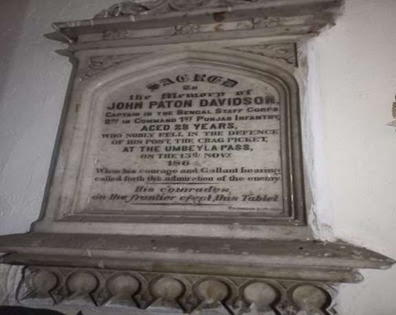
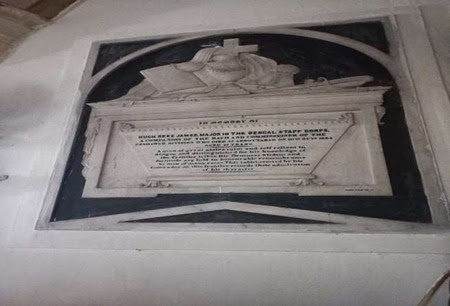
The church has three gates, the Lady Garden Gate, the Queen Victoria Gate and the Club Gate. The priest in charge briefed me about the ancient things inside the church like the chair of the Bishop of Calcutta, the ancient 159 years old pipe organ and 18th century Holy Bible, Sunday service record register having the signatures of the Bishop of Calcutta, its 18th century old bell, its ancient Tablets fixed in the memory of officers of the British Army in 18th century and before the partition of India and Pakistan. And also, its old church door key and the ancient offering plate.

       CHURCH INTERIOR

The interior of the church is kept almost in the same condition as it was made, the internal structure of the church roof is made of wooden beams. The church still has its ancient things including the Chair of Bishop of Calcutta, the ancient 159 years old pipe organ and 18th century Holy Bible, its 18th century old bell, its ancient Tablets fixed in the memory of officers of the British army of 18th century and before the partition of India and Pakistan. And also, its old church door key and the ancient offering plate, and 18th century Baptism font used for the Baptism of the newly born babies.

       THE CHAIR OF BISHOP OF CALCUTTA

The Saint Luke’s Church was consecrated by the Bishop of Calcutta in 1864. The chair was in the use of Bishop of Calcutta during the Holy Prayers of Sunday. This wooden chair is still present in good condition in the church.


THE 18TH CENTURY PIPE ORGAN

 The pipe organ is a musical instrument that produces sound by driving                         pressurized air (called wind) through the organ pipes selected from a keyboard. The pipe organ present  in the Saint Luke’s Church is of 18th Century but is not functional. It is         an ancient and very precious asset of the church present till date.


Beside this there is an Indian Piano which is still in working condition.

       THE 18TH CENTURY BIBLE 

The Saint Luke’s Church has an ancient (18th Century’s) and very precious master piece of Holy Bible in English language. This Holy Bible was used by the priests during the Sunday Prayer service.


       THE 18TH CENTURY CHURCH BELL 

The Saint Luke’s Church also has a big oldest bell that was fixed during the construction of this church. This bell rings every Sunday or any other specific day showing the time to start the Holy prayer service in the church. It is tied with a strong string with handle.


       THE ANCIENT TABLETS

The ancient tablets are placed on the walls of the church in the memory of English Army officer and most of them are of 18th century and are in original condition.


     THE OLD CHURCH DOOR KEY AND THE        ANCIENT OFFERING PLATE

The church’s main wooden door is made of Cedrous deodara, and it has a special lock & key and is a valuable asset of the church. The church has an old copper made offering plate of the same era. It is used to collect the offerings from the worshipers in the church during the prayer service.


THE 18TH CENTURY BAPTISM FONT BASIN

The church still has the 18th century rock made Baptism font Basin which is used to keep the Holy water for the Baptism or Christening of the newly born child.


OTHER FEATURES OF SAINT LUKE’S CHURCH 

On the top of the dome a cock is placed connected with the grounding wire to secure the church building from the lightening.

ANCIENT GLASS ART 

The ancient colorful artwork of the windows and ventilators give a spectacular view to the church and enhances the aesthetic sense of the architecture of that time.


A special tool to blow the candles after service

Ancient utensils of the church


Choir Gown and Sitting Area


                Inside View Of Church


        An Aerial View Of The Church Symbolizes         The Holy Cross


    An Outside View Of The Church


    Buildings Attached to the Church for                     Official/Residential Purposes

Abbottabad Club

Initially it was the part of the church premises and was used for British officers.


“I will end my article with some beautiful childhood memories in the premises of Saint Luke’s Church.”


SPECIAL THANKS AND REGARDS TO:

Respected Rev. Rafique Javed (Priest In charge) Respected Principal Mr. Abdul Wahid Mir Respected Co-Principal Ma’am Sameera Wahid Respected Coordinator Ma’am Fahmeedah Respected Teacher Ma’am Kinza

My Supportive Parents & My Beloved Sister


Tuesday, December 12, 2023

 Topic: States of Matter

Modernage Girls Campus:

Class: Grade 4 Students

Number of students: 15

Teacher: Ms. Neelum

Number of meetings: Twice a week

Students of grade 4 actively participated in this research. Research was conducted in the Chemistry lab of Modernage Public School and Girls College. They learnt the names of glass wares, chemicals and instruments and learnt how to use them. Glass wares used were china dish, beakers, flask, petri dish,flask,funnel ,glass rod,spatula,burner,spirit lamp,tripod stand and thermometer.We have selected few chemicals (Ice, iodine, Naphthalene, sodium chloride, sucrose, acetone, absolute ethanol, water, Sodium bicarbonate and vinegar) and studied their various properties like melting, freezing, boiling, evaporation and condensation. Experiments were conducted time to time.

As we know, matter exists in three States like solid, liquid and gas and all the 3 states are interlinked. Matter can change from one state to another through heating or cooling.

Solid: In solid particles are packed closely together. The force of attraction is so strong in solids. E.g. Ice, iodine, Naphthalene, sodium chloride etc. In liquid, particles are little bit far away, there is a weak force of attraction between particles E.g., water, vinegar, acetone, absolute ethanol etc. while in gas particles are far way. The force of attraction is very weak. E.g., water vapours, carbon dioxide gas etc.

Melting, freezing, evaporation, sublimation and condensation are common state changes. First of all, water was taken and then its three states were studied. Water is a universal solvent showing all three states of matter. Temperature was checked at every stage.

Results and Findings

1.Boiling:

It is the process of conversion into vapors by heating.

i. Water (H2O): Young researchers investigated how water changes its state from solid (ice) to liquid to gas (steam) under different conditions of temperature. Water freezes at 0 oC and it boils at 100 oC Water is a universal solvent showing all the properties.

ii. Sodium chloride: NaCl was mixed with water and NaCl solution was prepared in a beaker. It was heated. Temperature was checked with the help of thermometer. The boiling point of water was raised from 100oC to 102 oC.

iii. Sucrose:

Next, Sucrose common table sugar solution was prepared by adding sucrose in water. The sucrose solution was heated and temperature changed from 100 oC. to 110 oC.

iv. Absolute Ethanol: Boiling of Absolute Ethanol was done. It evaporated after reaching the temperature of 73 oC.

2. Condensation:

It is the process of conversion of vapors or steam into liquid state.

Water: To study the condensation of water, we put ice in a beaker and after some time the water droplets were seen on the outer surface of beaker, water droplets converts back into liquid due to lowering of temperature showing the process of condensation.

3. Freezing: Freezing is process of conversion of liquid to solid.

i. Water: Water froze when temperature reached to 0oC. and converted into ice.

ii. Ethanol and Acetone: Ethanol and acetone were taken and placed in the freezer in two separate bottles for 2 days. After 2 days bottles were taken out it was observed that they were still in the liquid state. Minimum freezing range of freezer was  -18oC while, Absolute Ethanol freezes at -114oC and acetone freezes at -90.8oC.

4. Evaporation:

It is the process of conversion of liquid into vapors or steam.

i. Water: Water as a universal solvent easily evaporated. When temperature reached to 100 oC.

ii. Acetone: Acetone was placed in a petri dish after 30 minutes acetone evaporated.

iii. Ethanol: Ethanol was also placed in a petri dish; it evaporated at room temperature but it took more than 3 hours to evaporate at room temperature. When placed in a beaker and heated it easily evaporated in few mins.

iv. Baking soda: Researchers created a chemical reaction by mixing baking soda with vinegar and heated the vinegar solution. Bubbling was observed. After just few minutes fizzing and gas formation was observed, showcasing a change in state and the release of carbon dioxide gas from the solution.

5. Sublimation: It is a process of conversion of solid to gas.

i. Ammonium chloride: First Ammonium chloride was taken in a China dish and heated by placing an inverted funnel over the China dish. After few minutes, white ammonia chloride converted into vapors.

ii. Iodine: Next, iodine was taken. It is a purple solid, when iodine was heated, it converted into gas.

iii. Naphthalene: Naphthalene was taken and its properties were studied. Naphthalene also converted into gas directly.

6. Melting:

It is the process of conversion of solid into liquid state by heating.

i. Ice: Ice was taken in a beaker and beaker was placed at the room temperature. After some time, ice changed into water showing the process of melting.

ii. Butter and Chocolate: Butter and chocolate were taken in separate China dishes and melting was done by heating. They easily melted from solid to liquid state. When the heat source was turned off. They again converted to solid state.


Friday, December 8, 2023

 Topic: Factors affecting plant growth and how 

plants respond to different stimuli.

Modernage Girls Campus:

Class: Grade 3 Students

Factors Affecting Plant Growth: There are several 

factors necessary for plant growth.

1st Phase:

Phase 1 of our research focused on identifying key factors 

influencing plant growth. Students were equipped with pots, 

soil, and a variety of plant species to cultivate. The objective 

was to keenly observe the critical conditions necessary for 

optimal plant growth, encompassing sunlight, air, water, and 

temperature. Each of these factors was systematically examined 

through controlled experiments:

Deprivation of Water: A plant was deliberately deprived of water,

and our observations revealed that its leaves and flowers rapidly wilted, with no growth.


ii. Absence of Light: To understand the impact of light, we selected a plant and covered a portion of its leaves with white paper, simulating a lack of light exposure. Over a few days, the covered leaves turned yellow, emphasizing the necessity of light for photosynthesis and healthy plant growth.


iii. No Air Circulation: We isolated a plant in an environment devoid of air and proper ventilation. The consequences were evident as the plant exhibited signs of wilting, reinforcing the importance of oxygen and carbon dioxide exchange for plant vitality. iv. Temperature Variations: we investigated the influence of temperature variations on plant growth and how different temperature ranges affected the growth and development of these plants. One plant was left in direct heat and it caused its leaves wilted.

How plant respond to stimuli:

2nd Phase:

Second phase of the research was how plant respond to stimuli.

Stimuli can have various affects, on plants, influencing their growth, development, and behavior.

Some of these common responses were experimentally checked.

i. Light Response:

Students have conducted experiment to understand how plants grow towards sources of light. They placed a pot of a plant in a closed box with a small hole in it. it was observed that plant bend towards the light source. Most plants bear flower when in light, and it’s clear from the first phase of the research that light is necessary for photosynthesis. Some petals only open when sunlight is available they were even with closed petal in cloudy weather.

I. Light Response:
Students have conducted experiment to understand how plants grow towards sources of light. They placed a pot of a plant in a closed box with a small hole in it. it was observed that plant bend towards the light source. Most plants bear flower when in light, and it’s clear from the first phase of the research that light is necessary for photosynthesis. Some petals only open when sunlight is available they were even with closed petal in cloudy weather.


ii. Touch Response: Plants even responded to touch like., Mimosa showed clear response to touch and it was cleared and interesting to students when they experienced it.

iii. Temperature Response: High and cold temperatures also effects the plants rise and fall below optimum temperature causes leaf death.

iv. Gravity Response: Various roots of the plants were observed and it was noted that roots of the plants grow in downward direction because of the gravity. Roots show response to water source.

Plants have evolved complex mechanisms to sense and respond to these stimuli, enabling them to adapt to their environment and optimize their chances of survival and reproduction.

Conclusion: Our research aimed to provide valuable insights into the factors and stimuli that impact plant growth, paving the way for a deeper understanding of plant biology and more effective cultivation practices.

  Research Topic: Wonders of Sea Life. Presented by: Grade 1 Students.