Thursday, January 11, 2024

 Topic: History of Periodic table

 Public School and College Abbottabad

Modernage Girls Campus:

Class: Class 9th

Supervised by : Ms. Nimra Zubair

RESEARCHERS: Insha Zainab

                                Summaya Shaheen

                                Horiya Khan

                                Laraib Qaiser

                               Fatima Sajid

MEETING DAY : Tuesday, Thursday

MEETING TIME 3rd Period , BREAK

MEETING VENUE : Computer Lab

Abstract

The periodic table is one of the most iconic accomplishments in the discipline of chemistry, providing as a visual representation of the underlying organization of chemical elements. The history of the periodic table is explored in this research article, from early philosophical hypothesis on the nature of matter to the current classification scheme that serves as the foundation of present-day chemistry. The article highlights how important individuals like Mendeleev and Moseley, as well as later developments in atomic theory, helped to modify the periodic table into what it is today. 


Introduction

The periodic table, which displays an organized collection of chemical elements according to their atomic features, is an essential element of modern chemistry. From its earliest philosophical conceptions to its contemporary manifestation, it has gone through significant developments, intellectual disputes and deep truths. This piece of writing aims to explain how the periodic table has changed during the time, noting major events, prominent people, and the evolving theories that have influenced its design.

Ancient Philosophical Foundations:

The nature of matter and the presence of essential constituents were topics of discussion for ancient Greek philosophers like Empedocles and Democritus, However, Antoine Lavoisier's revolutionary studies regarding the conservation of mass and chemical naming did not lay a foundation for systematic elemental classification until the last decade of the 18th century.

Periodic Table Predecessors:

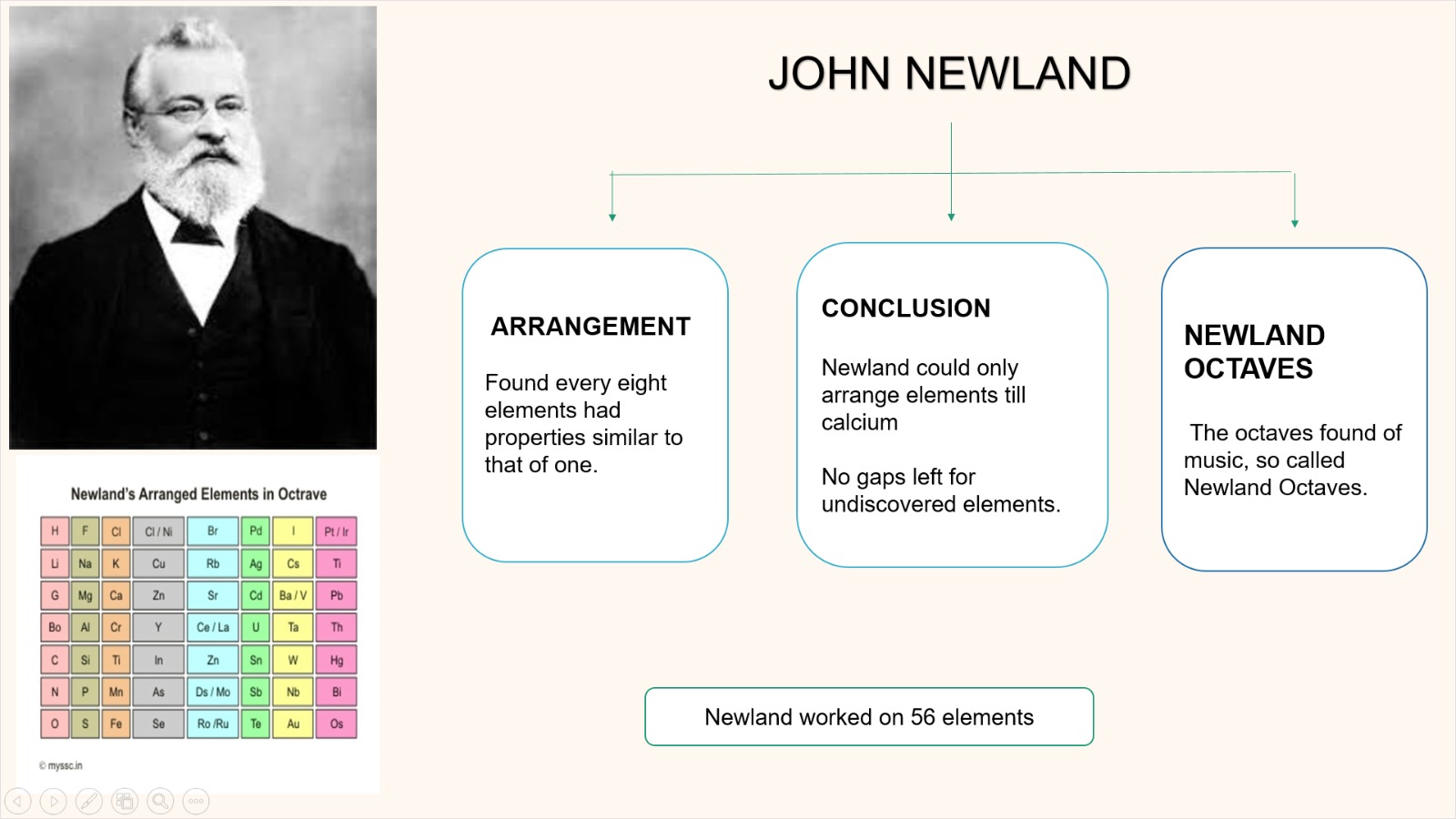
Both the Law of Triads and the Law of Octaves, respectively, were proposed by chemists like Johann Wolfgang Döbereiner and John Newlands in an effort to organize components based on particular patterns and correlations. Despite its drawbacks, these efforts constructed the way for the eventual creation of the periodic table.

Mendeleev's genius:

Dmitri Mendeleev's periodic table from 1869 signifies a turning point in the development of science. He left spaces for yet-to-be-discovered elements and accurately predicted their properties by arranging the elements according to their increasing atomic weights. His discovery of the powerful connection between atomic structure and chemical behavior, is referred as the periodic law, indicated that the properties of elements are controlled by the periodicity of their atomic weights.

Contemporary Understanding of Atomic Structure:

The study of atomic structure witnessed a revolution in the early 20th century with the development of quantum physics and advances in atomic theory. The drawbacks of earlier structures were addressed by Henry Moseley's modification of the periodic table based on atomic number rather than atomic weight after he discovered the connection between atomic number and x-ray spectra.

Modern Periodic Table:

The elements in the modern periodic table are arranged into periods and groups and are based on atomic number. Because the electron configurations of elements in the same group are similar, assumptions related to the behavior of those elements are possible. The periodic patterns that control chemical reactions, elemental properties, and their periodic trends can all be understood using the periodic table.

Beyond Mendeleev's Table:

As new elements are produced and verified, today's periodic table keeps growing. The so-called super heavy elements, which are elements with atomic numbers over 118, give problems for theoretical models and add to our knowledge of nuclear physics.


Chemists who contributed in the making of periodic table:

ANCIENT TIMES:

 Antiquity:

Philosophers and alchemists speculate about the existence of basic elements like earth, air, fire, and water.

17th Century: 1661

Robert Boyle distinguishes between elements and compounds in his book "The Skeptical Chemist."


18th Century: 1789

Antoine Lavoisier publishes "Elementary Treatise on Chemistry," proposing a list of elements and introducing the concept of chemical reactions.

Early 19th Century: 1817

Johann Wolfgang Döbereiner formulates the "triads" concept, grouping elements with similar properties.

1829

Johann Wolfgang Döbereiner discovers the law of triads, which predicts the properties of missing elements within certain groups.


Mid 19th Century: 1864

John Newlands proposes the "Law of Octaves," suggesting that elements repeat their properties every eighth element.

1869: Dmitri Mendeleev and Julius Lothar Meyer independently publish their periodic tables. Mendeleev's table is more widely accepted due to his successful prediction of missing elements.


Late 19th Century:1871

Mendeleev's periodic table is published in its improved form.

A Russian chemist and inventor. He is best known for formulating the Periodic Law and creating a version of the periodic table of elements.

1894: Lord Rayleigh and Sir William Ramsay discover the noble gases, which lead to the expansion of the periodic table.

20th Century:1913

Henry Moseley establishes the modern periodic law, arranging elements by atomic number instead of atomic weight.

1930: The periodic table is further refined and expanded as new elements are discovered.’

An English physicist, whose contribution to the science of physics was the justification from physical laws of the previous empirical and chemical concept of the atomic number. This stemmed from his development of Moseley's law in X-ray spectra.


Post-World War II: 1952

Glenn T. Seaborg and his team synthesize and identify elements beyond uranium, expanding the periodic table.

2016: The International Union of Pure and Applied Chemistry (IUPAC) officially names elements 113 (Nihonium, Nh), 114 (Flerovium, Fl), 115 (Moscovium, Mc), and 118 (Oganesson, Og).

An American chemist whose involvement in the synthesis, discovery and investigation of ten Trans uranium elements earned him a share of the 1951 Nobel Prize in Chemistry.

21st Century:  

Ongoing research continues to explore and synthesize new, super heavy elements, pushing the boundaries of the periodic table.

This provides an overview of the key milestones and developments in the history of the periodic table. It has evolved significantly from its early philosophical roots to its current form, reflecting our deepening understanding of the fundamental building blocks of matter.


The first Periodic Table:

Our Modern Periodic table, the table for which chemists worked very hard.

There haven't been any fundamental changes to the structure of the periodic table. However, there have been ongoing advancements and research in the field of chemistry that may lead to potential changes or refinements in the future.


Island of Stability:

Scientists have been exploring the concept of an "Island of Stability," which suggests that there might be a range of super heavy elements that are more stable than currently known ones. These elements could have longer half-lives and potentially practical applications in the future.

Reactivity and Applications:

Understanding the properties of newly discovered elements is crucial for potential future applications in various fields, including nuclear physics and materials science. Researchers have been studying the reactivity of these elements to gain insights into their behavior.

Periodic Trends and Predictions:

Ongoing research has improved our understanding of periodic trends and the behavior of elements within the periodic table. Computational chemistry and quantum mechanics have played significant roles in predicting and explaining the properties of elements and their compounds.


Final Remarks:

The history of the periodic table reflects the progressive growth of human understanding of substance and its properties. The periodic table is proof of human ingenuity and scientific progress, from early supposition to Mendeleev's wisdom and later revelations of the atomic theory. It serves as a strong framework that connects various components, promoting unique thoughts into the substance of the material world.

References:

Website reference:

1.     https://chemistry-europe.onlinelibrary.wiley.com/doi/10.1002/ejic.201801409

2.     Stephen A. MatlinGoverdhan MehtaHenning HopfAlain Krief

3.     First published: 28 March 2019

Book reference:

1.     Paul Strathern, 2000, Mendeleyev's Dream: The Quest for the Elements

2.     Robinson, A. ed., 2023. The Scientists: Pioneers of Discovery. Thames & Hudson.

3.     Maes, C., 2023. Facts of Matter and Light: Ten Physics Experiments that Shaped Our Understanding of Nature. Springer Nature. Agassi, J., 2022. The Philosophy of Practical Affairs: An Introduction. Rowman & Littlefield.


Monday, December 25, 2023

 Topic: Sights and Sounds in Modernage 


         Public School and College Abbottabad

Modernage Girls Campus:

Class: RESEARCH PROJECT OF 6th Amber

Supervised by :Ms Amna Amin

RESEARCHERS:

AAIRA IBRAHIM,

ABEERA QAISER,

AMINA IMRAN,

AYESHA FAROOQ,

EMAN FATIMA,

HAREEM AHMAD,

HIFSA NOOR,

HUDA ALI,

INAYA ASIF

Area of study and what children did

            This project is based on students’ observations in Modernage girls campus.

           Outline

           Introduction

           Classrooms

           Garden area

           Play grounds

           Canteens

           Entrance

           Labs

            Auditorium 

           Research objectives

                    To enhance students’ observation skills.

                    To teach students how to closely listen the sounds around them.

                    To teach students how to closely observe the sights around them.

                    To use the observations in learning process.

Research Article 

If you haven't visited Modernage Public School and College Abbottabad, then let us discuss some sights and sounds in Modernage Public School and College. By reading this article, we are sure that you will know the beauty and sounds and sights of Modernage Public School. 

When you enter modern age, you pass from different and unique sights and corresponding sounds. Now taking a beautiful start from the main gate of modern age, there is a giant and attractive garden on the right hand of the main gate. In the garden, you will find greenery. In the cages, there are some hens and different types of pheasants. There were some sounds of hens and voices of children who were playing on the swings.


Further along, there is a small place where there is a fountain that produces the splashing sound of water. On the left hand of the entrance of Modernage, there is an enormous ground. In the ground, kids could be seen playing, some gossiping and chatting with each other meanwhile some eating their lunch. There are 2 canteens in total. The first one is located at the left corner of the main ground where there is a long queue of children who are holding money in their hands and waiting to buy food as they don't bring food from home. The same happens in the second canteen which is in the corner of basketball ground. Now, moving towards the basketball ground. This is a place where you could explore your blasting skills of basketball. There are 2 loops that stand at the both edges of basketball ground which is rectangular.

Now, lets give a fantastic tour to all our labs. Firstly, lets talk about chemistry and biology lab where you would be surrounded by a bustling atmosphere of learning and exploration. On the table of biology lab lies a microscope for various investigations and learning. You could also hear the sounds of students who are engaged in scientific discussions, the gentle clinking of glassware and the occasional buzz of the equipment. Now comes physics lab where all the activities related to physics are performed. 

 Its time to talk about the classes and corridors of the ground floor. There are almost twenty to twenty-two classes and six corridors. The corridors are decorated with Islamic and cultural boards. Walking towards the first floor, there are six corridors and nineteen to twenty classrooms. Teachers could be seen giving students wonderful and interesting lectures. There is also a library where you can see plenty of books that include English, Urdu, mathematics, biology, chemistry, history, physics books and many other encyclopedias. There is no sound in library because talking and making disturbance is not allowed.

Let's talk about the hall of Modern age which is quite huge where there is a big stage and a high quality music system. There are also soundproof walls and it has 2 doors which are at the edges. There are  photos of some high achiever students who are Modernites and their experiences. Many students have made their wonderful memories here. 

There is also one activity room where nowadays, students practice yoga for sports week. You could hear the voices of teachers who are guiding children and students who are joyfully performing it with the song that is played loudly in the speakers. There is a huge chalk board and a mirror too.

Now at last, lets talk about all the offices in Modernage. There is a bursar office, two academic coordinator offices, vice principal office and an administration office. Each office is built for a specific purpose.

You have gone through all the uproarious sounds and wilder sights in this inspiring institute. This school has brought light to many lives and made students lives better. The moment you enter this school, you see many cherished faces and security guards who are always alert. There are different sounds coming from the garden that include the chirping of birds. The students are always athletic and fresh, and they have sharp minds and many talents. The teachers are always teaching the students. The guards are always hyper vigilant at the gate. These sounds always makes us wonder we are living in the crowded city. We all love our school, and we hope that you would notice all these sights and sounds when you will visit Modernage.


Thursday, December 21, 2023

Topic: Effect of social media on language

Modernage Girls Campus:

Class: Grade 5

Teacher: Ms Zobia Asghar

Members:

Arfa Moheet

Fizza Qasim Shah

Mishal Shahzad

Zikiriya Sheikh

Ayesha Noor

Naima Ali

Humaira Malik

Muhammad Mujtaba

Maheen Adeel

Aima Anjum

Seerat Yasir

Hareem Bashir

The fifth-grade students were introduced to the research topic, which focuses on how social media affects language. They received an explanation of what research entails and the research process. Following this, a group of students was selected, and a meeting was held in the seminar hall to brief them on the research approach, its significance, and the chosen topic. During the first meeting, students were tasked with gathering information about social media, social gadgets, and their usage frequency. This marked the initial stage of the research project.


Following their research orientation, the students proceeded to craft inquiries aimed at understanding the influence of social media on language. They sought to identify questions that could be posed to individuals to ascertain the extent to which social media affects their language.


Each student brought their own set of questions, and during the meeting in the hall, we collectively reviewed and selected specific questions to be included in our final questionnaire.


The questionnaire was created, refined, and subsequently transformed into a Microsoft Forms format. This allowed us to efficiently distribute it to individuals for response collection and facilitated easy access to the results on the backend.


The Microsoft Forms questionnaire was distributed to individuals through WhatsApp, and we received responses from 55 participants. 

Social media:

Social media refers to the means of interactions among people in which they create, share, and/or exchange information and ideas in virtual communities and networks.

Language:

Language is a system that people use to communicate or share information.

Social media have been changing the individuals’ method for living in many ways especially in the objects linked to the communication domain, knowledge, and education.

The effects of social media on language can be both positive and negative. There are are some of the effects:

1. Abbreviations and acronyms: Social media platforms have popularized the use of abbreviations and acronyms to communicate more quickly and concisely. Examples include “lol” (laugh out loud), “brb” (be right back), and “omg” (oh my god). While this can be convenient, it may also lead to a decline in proper grammar and spelling.

 2. Informal language: Social media encourages informal communication, with users often adopting a more relaxed tone and using colloquial language. This informality can impact language use in other areas of life, leading to a blurring of boundaries between formal and informal language.

3. Language evolution: Social media has become a platform for creativity, with users inventing new words, phrases, and memes. This contributes to the evolution of language and the creation of new linguistic trends and expressions.

4. Increased exposure to different languages: Social media connects people from different cultures and languages, providing a space for multilingual communication. Users often encounter words and phrases from other languages, which can contribute to language diversity and cross-cultural understanding.

5. Attention span and writing skills: The fast-paced nature of social media, with its character limits and constant stream of content, has led to a decrease in attention span. Some argue that this impact writing skills by promoting shorter, less structured, and more fragmented texts.

6. Influencer language: Social media influencers have a significant impact on language trends. Their distinctive language use, catchphrases, and vocabulary can influence a wide audience and contribute to the adoption of new linguistic styles.

7. Emoticons and emojis: Social media platforms popularized the use of emoticons and emojis as visual representations of emotions. While they enhance communication, they can also be seen as a simplification of language and a potential reduction of textual nuance.

In summary, social media has had a significant impact on language use and communication styles. It has fostered the evolution of language, led to the emergence of new linguistic trends, and encouraged informal and abbreviated language. However, it also poses challenges such as fake news dissemination and potential negative effects on attention span and writing skills.

Based on our research, a significant number of individuals use social media, with many believing that it contributes to language learning. However, our findings also indicate that for children, careful monitoring and supervision are crucial. Therefore, our research leads to the following conclusion:

In summary, our research underscores the widespread use of social media and its potential benefits for language learning. However, it highlights the importance of implementing appropriate measures to ensure the safe and responsible use of social media, particularly for children. It is essential for parents, guardians, and educators to actively monitor and guide young users in order to maximize the positive aspects of social media while minimizing potential risks.


Tuesday, December 19, 2023

 Topic: UNVEILING THE HISTORY OF ST. LUKE’S CHURCH, ABBOTTABAD

Modernage Girls Campus:

Class: Grade 5

Article by: Qasim Iqbal


St Luke’s Church:  St Luke’s Church is almost 200 years old and was built during the British regime in Abbottabad.I I got to know that St Luke’s Church was an Anglican church, dedicated to Saint Luke and was now under the control of the Peshawar Diocese of the Church of Pakistan. It was founded in 1864 when the British were ruling the area.


St. Luke: I read about St Luke and got to know that he was known as Luke the Evangelist and is one of the Four Evangelists who were the four traditionally ascribed authors of the canonical Gospels. It is also said that the Early Church Fathers ascribed to him the authorship of both the Gospel of Luke and the Acts of the Apostles, which would mean Luke contributed over a quarter of the text of the New Testament, more than any other author. The Roman Catholic Church and other major denominations venerate him as Saint Luke the Evangelist and as a patron saint of artists, physicians, bachelors, surgeons, students and butchers. This church in Abbottabad was also named after the St Luke.


Construction of Church: According to the history of this Church it is said that the construction of St Luke’s was carried out somewhere in 1854-55. It is said that the construction faced delays due to slow fundraising and then a brief interruption due to the Indian Rebellion of 1857 and it was completed and then consecrated by the Bishop of Calcutta in 1864. Interestingly at that time the jurisdiction of this Church covered most of the Hazara region including Abbottabad itself, Haripur, Mansehra and the Galiyat hill tracts. 

Visiting the Church: I visited the church on a Sunday along with my metheras I entered I was struck by the grand imposing structure of the church. I met the priest of the church Mr. Riaz Mubarak. He was kind enough to greet us and allow us to visit the church. There were a few worshippers left from the Sunday processions. If you see the church, you will surely realize its age. The construction style also tells that it is a typical colonial construction. The ambiance of the place is so great. While visiting the Church you feel a sense of serenity and calmness in the air. It is no doubt a mesmerizing site and the structure is grand and imposing .One is surrounded by the greenery. It is made with heavy stones and gives an impression of power which this place held in old British times. Birds while sitting on the tower of the church gave a scenic view and then the clouds with blue sky added to the beauty of this grey structure.


The building: The building is made from grey stone, eggs , some lentils, cloth and other locally available materials and the same structure is being maintained till date. It costed around Rs. 15000 to build this church at that time. The monthly maintenance of the church building these days is about Rs. 40-50,000 / month these days which is fulfilled by the donations. It has three gates . Lady garden gate, Queen Victoria gate and club gate. It has a beautiful rest house attached to it which was built for the British army.
Inside of the Church: Just like the basic structure of every church, the inside of St. Luke’s Church is also very beautiful . There are two tablets installed on the walls in the memory of Robert Roy Adams (1864) and John Paton Davidson (1865).At one corner of the church there is Holy place for the priest and in the other corner there is the Holiest place which is reserved for the Holy communion and only the Bishop can sit on the seat. The place is off bounds for everyone else. There is an other Holy seat in one corner there which is called ” cathedra” that was placed in 1864 for the visit of Bishop Of Calcutta due to which it is called “ as Cathedral” as well, the only cathedral in Hazara division. There are seats placed in the third part of the church for the masses separated by the spaces called aisles. There are also separate chairs placed for the choirs.


Services: There are regular services carried out in the church every Sunday. Apart from that there are separate services for the females once a week and also junior church as well which is also held once a week as well.

While visiting the St Luke’s church you feel a sense of serenity .It is no doubt a mesmerizing sight which leaves you spell bound with its grand structure. Birds sitting on the tower give a scenic view. It was a very informative visit where not only I learnt about the Christian religion but I also learnt about the interfaith harmony as well.


Sunday, December 17, 2023

 Topic: SHIMLA HILL ABBOTTABAD

Modernage Girls Campus Research Work.

Presented By: Qumar Zaman 4(E)

Class: Grade 4 & 5


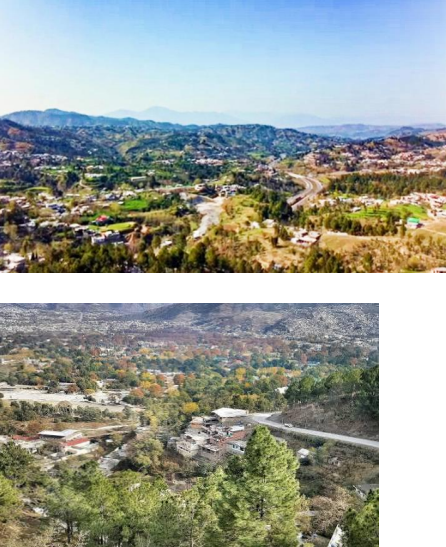
LOCATION: It is located four KM away from the main city near Abbottabad jail road.

IMPORTANCE: It is the highest spot of the city. Clear view of the city can be obtained from the top of the hill.


BEST EXAMPLE OF NATURAL SCENERY: Old, tall pine trees with fresh air make the environment soothing. Thick green belt attracts the attention of the visitors.


Recreation and entertainment: Special arrangement for children’s entertainment with swings, slides, birds and pet animals. 


Cafeteria: Cafeteria with tea, coffee and different spicy items visitors get energy from this point. 

Steps to be taken: 

                            ➢ Administration should be attention to its maintenance and cleanliness. 

                             ➢ Special guards to be posted to ensure safety and security. 


  Research Topic: Wonders of Sea Life. Presented by: Grade 1 Students.